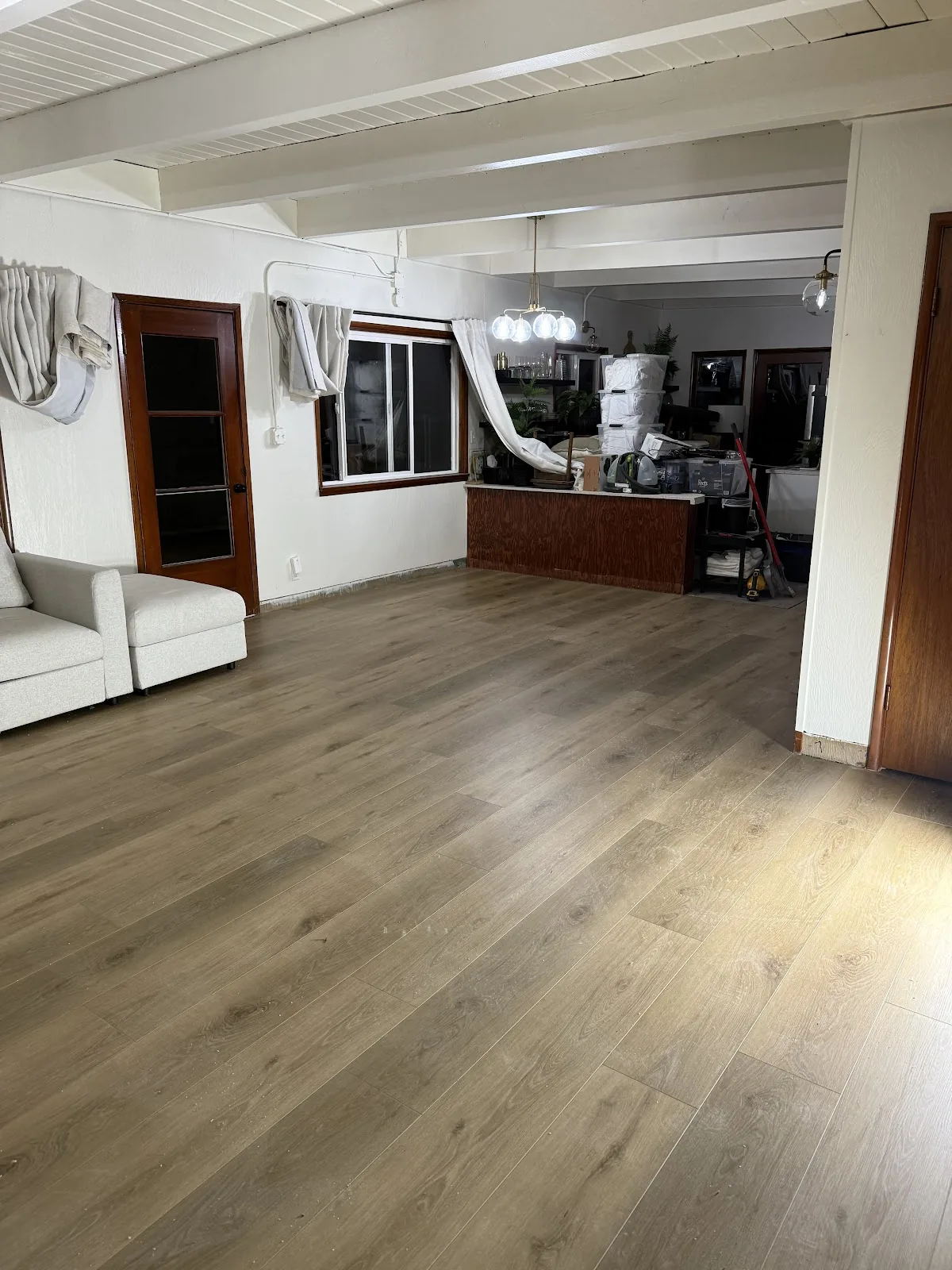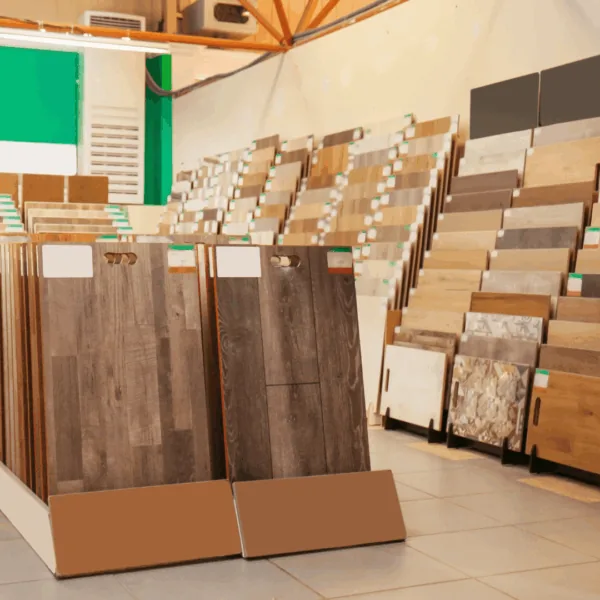
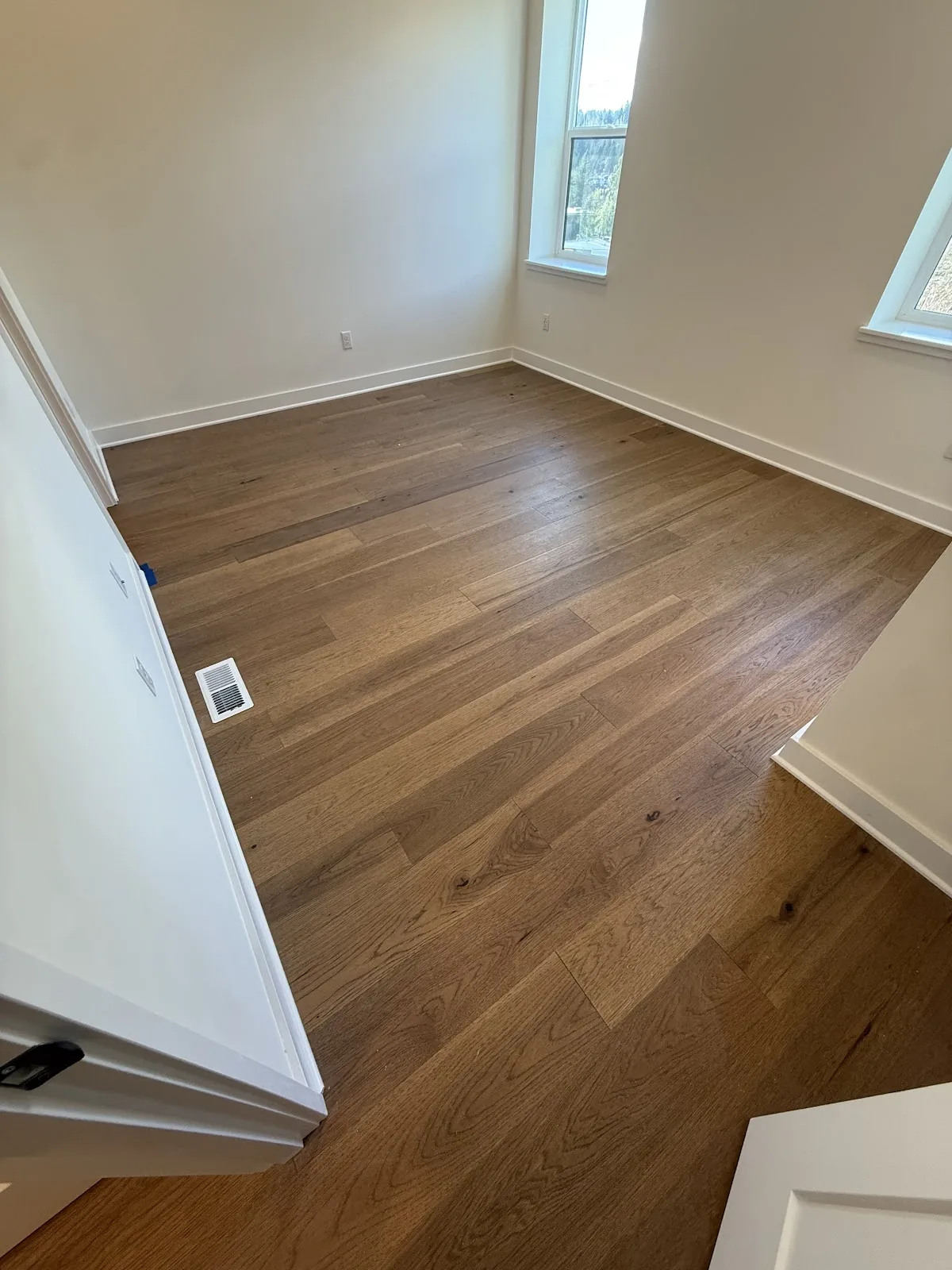
It's one of the first questions we get on nearly every free in-home estimate: should this house get solid hardwood or engineered hardwood? Both look beautiful, both last for decades when they're installed right, and both come up in almost every hardwood conversation we have with homeowners around Snohomish. The honest answer depends less on style and more on what's underneath your feet - your subfloor, your foundation type, and how much moisture your home deals with through a typical Puget Sound winter.
How Our Climate Affects Wood Floors
Snohomish County doesn't get extreme temperature swings, but we do get sustained damp weather for months at a time, followed by a drier summer stretch. Wood is a natural material - it absorbs moisture from the air and releases it as conditions change, expanding and contracting slightly all year. In a home with a vented crawlspace near the water or low ground, that moisture exposure is more constant than in a newer, well-sealed suburban build on a slab. Neither situation rules out hardwood, but it changes which type - and which installation approach - makes sense.
Older homes near town centers often sit on crawlspaces with more humidity variation, while newer construction further out tends to be slab-on-grade or better insulated. We ask about your foundation and crawlspace condition on every hardwood estimate for exactly this reason - it's the biggest factor in how a wood floor will perform over time, more than the species or the finish color.
Solid Hardwood: The Classic Choice
Solid hardwood is a single piece of wood, milled tongue-and-groove, top to bottom. Its biggest advantage is longevity: because there's no wear layer to sand through, a solid floor can typically be refinished several times over its life, which is part of why it holds resale value so well. The tradeoff is that solid wood is more reactive to humidity - it's generally not recommended directly over a concrete slab or in a below-grade space, and it needs a stable, properly vented subfloor to perform well long-term.
Engineered Hardwood: Built for a Marine Climate
Engineered hardwood is a real hardwood wear layer bonded over a cross-layered plywood or high-density core. That layered construction is what makes it more dimensionally stable - it resists the cupping and gapping that humidity swings can cause in solid wood, and it can go over a slab, over radiant heat, or in a basement level where solid hardwood usually isn't recommended. For a lot of the homes we work in around Snohomish County, especially anything with a slab foundation or a lower level, engineered is the more practical long-term choice without giving up the real-wood look underfoot.
Refinishing: New Life for Existing Floors
Not every project is new flooring - a lot of what we do is bringing tired, scratched-up hardwood back to life. Sanding and refinishing an existing solid floor (or a thick-enough engineered wear layer) can completely change a room for a fraction of the cost of replacement, and it's often the right move for original hardwood in an older Snohomish home that's simply lost its finish over the years.
Which One Is Right for Your Home?
- Slab foundation, radiant heat, or a basement level - engineered hardwood is almost always the safer call.
- Vented crawlspace with normal humidity, main-level installation - either can work; we'll walk your specific subfloor with you.
- Original hardwood that's dull, scratched, or dated but structurally sound - refinishing may cost far less than replacing it.
- Planning to stay long-term and want maximum future refinishes - solid hardwood has the edge.
There's no substitute for actually looking at your subfloor and foundation before recommending one over the other, which is exactly what we do on a free in-home estimate - we measure your rooms, check your subfloor condition, and tell you honestly whether solid or engineered hardwood is the right buy for your home before you order anything. See what neighbors around Snohomish have said about working with us on our reviews page.